
You wake up with a sore jaw. Or your partner says you grind your teeth at night. Or your dentist points out flat, worn edges you never noticed. The usual answer is a night guard.
A night guard is often the right call. But there’s a question worth asking first: why are you grinding? For some people, the answer has to do with how they breathe while they sleep.
Signs You Grind Your Teeth at Night
Our custom night guards page lists the common signs. In short, watch for:
- Jaw soreness or a headache when you wake up.
- Teeth that look flatter or shorter than they used to.
- Chips or cracks with no clear cause.
- A partner who hears it at night.
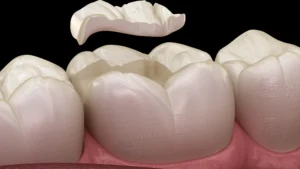
It’s hard on dental work too. It can crack fillings and loosen dental crowns. If a crown has popped off on you before, grinding may be part of the reason.
The Link Between Teeth Grinding and Sleep Apnea
Sleep apnea means your airway partly closes while you sleep. Your breathing stops and starts, over and over. Researchers have studied how often grinding and sleep apnea show up in the same people. A 2024 study in BMC Oral Health concluded that grinding in people with sleep apnea isn’t only a dental problem.
That matters because the two need different fixes. A night guard protects your teeth. It doesn’t open your airway.
Can a Regular Night Guard Make Sleep Apnea Worse?
It might, for some people. A standard night guard is a flat, hard cover for your teeth. In a small 2004 pilot study, some people with sleep apnea breathed worse at night while wearing one. A later randomized trial also found a risk of worse sleep apnea, though the effect was small.
The research is limited, and it doesn’t mean night guards are dangerous. It does mean it’s smart to screen for sleep apnea before you get one. That’s a short conversation, not a big test.
Why Dr. Stout Asks About Your Sleep
Before and during college, Dr. Craig Stout worked in polysomnographic technology. That’s the field behind overnight sleep studies. So when he sees worn teeth, he asks about sleep too.
Expect questions like these:
- Do you snore loudly, or has anyone said you stop breathing at night?
- Do you wake up gasping or choking?
- Are you tired during the day, even after a full night’s sleep?
- Do you wake up with headaches?
- Do you have high blood pressure?
If your answers point toward sleep apnea, we’ll suggest you ask your doctor about a sleep study. Only a physician can diagnose it. If you’re diagnosed, a custom sleep apnea oral appliance may be an option. It holds your lower jaw slightly forward to help keep the airway open, and it covers your teeth while it does.
One note for BYU-Idaho students. The Student Health Plan handbook excludes care for sleep disorders, including tests to diagnose them. Check your coverage before you book a sleep study.
Daytime Clenching Counts Too
Not all clenching happens at night. Plenty of people clench while they study, drive, or stare at a screen. If your jaw aches during finals or a stressful stretch at work, daytime clenching may be part of it.
A night guard won’t help with daytime clenching. Noticing it will. Your lips should touch, but your teeth shouldn’t. If you catch your teeth pressed together, let your jaw relax.
What a Night Guard Visit Looks Like
If a custom night guard is the right call, it usually takes two short appointments. At the first, we take a digital scan of your teeth. At the second, we check the fit and adjust it until it’s comfortable.
Bring your guard to your regular cleanings. We’ll check that it still fits and isn’t worn through. A guard with a hole ground into it isn’t protecting that spot anymore.
When a Night Guard is the Right Answer
For many people, a custom night guard is exactly right. If you grind, don’t snore, sleep well, and wake up rested, it’s a simple fix. It spreads out the force and protects your enamel and your dental work.
The goal isn’t to talk you out of one. It’s to make sure it’s the right tool. Dr. Stout will look at the wear on your teeth, ask about your sleep, and tell you straight what he’d do.
Teeth Grinding FAQs
Waking up with a sore jaw? Call Family First Dental at (208) 400-9946 or book online. We’ll check the wear on your teeth and ask the sleep questions most offices skip.
How do I know if I grind my teeth at night?
Morning jaw pain, headaches, worn or chipped teeth, and a partner who hears it are the common signs. A dental exam can confirm it by looking at the wear on your teeth.
Is teeth grinding a sign of sleep apnea?
It can be, but grinding alone doesn’t mean you have sleep apnea. If you also snore, wake up gasping, or feel tired all day, ask your doctor about a sleep study.
Can I buy a night guard at the store instead?
You can. A store guard isn’t made from a scan of your teeth, so the fit is looser. A custom guard is shaped to your bite. Either way, screen for sleep apnea first.
Do you make sleep apnea appliances in Rexburg?
Yes. We make custom oral appliances in our office for adults whose doctor has diagnosed sleep apnea. Call (208) 400-9946 to ask how it works.