
Rexburg's trusted dentist for your whole family
Quick Summary: Your implant consultation starts with cone beam imaging, displayed on a screen right in front of you. We go over bone density, gum health, and exactly where an implant can go, so you leave with a real plan instead of guesswork.
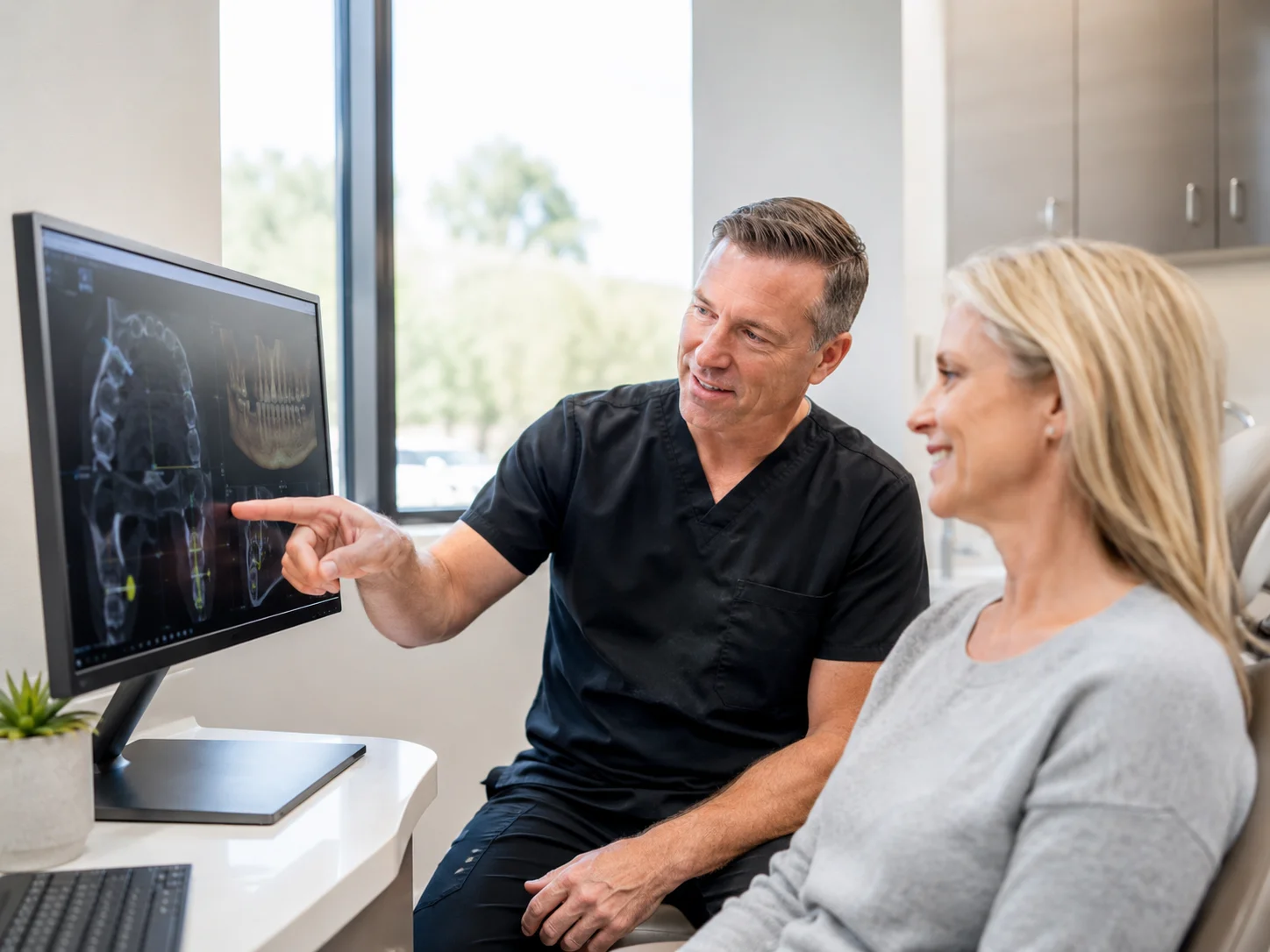
Here’s what actually happens when you sit down with us for an implant consultation. First, we look at the tooth or gap that’s been bothering you. Then we pull up a cone beam CT scan, which gives us a full 3D picture of your jawbone instead of a flat X-ray image.
We show you the scan right there on the screen. You’ll see your own bone, your own nerve position, and your own sinus if it’s an upper tooth involved. Patients often tell us nobody has ever explained their mouth to them this clearly before.
After that, we talk timeline. Some cases move straight to guided implant surgery. Others need a bit of prep work first, like a healing period or a small procedure before the implant goes in. We’ll tell you exactly which situation applies to you.
No pressure and no rushed decisions here.
You’ll walk out with a real plan, built from images you saw with your own eyes, not just something we told you.
Patients walk into our Rexburg office from a handful of different starting points, but nearly all of them share one thing: a dental situation that’s gotten too hard to ignore. Some show up with a single missing tooth they left untreated for months, watching the neighboring teeth slowly drift into the empty space. Others come in because a bridge that served them well for a decade is now failing, with decay working its way in under the crown or the supporting teeth starting to weaken. And then there are the folks dealing with a denture that no longer fits right, one that clicks or slips during meals and conversations in a way that feels embarrassing, or just plain frustrating.
Chronic pain is another common trigger. A cracked molar that flares up every time you bite down, or a tooth that’s been root canaled and retreated more than once, usually means that tooth is living on borrowed time. Rather than keep patching a structure that keeps failing, many patients decide it’s time to look at a permanent replacement instead. We also see a steady stream of referral patients seeking a second opinion after being told elsewhere that extraction and a bridge were their only choices, only to find out an implant was actually feasible once the right planning was done.
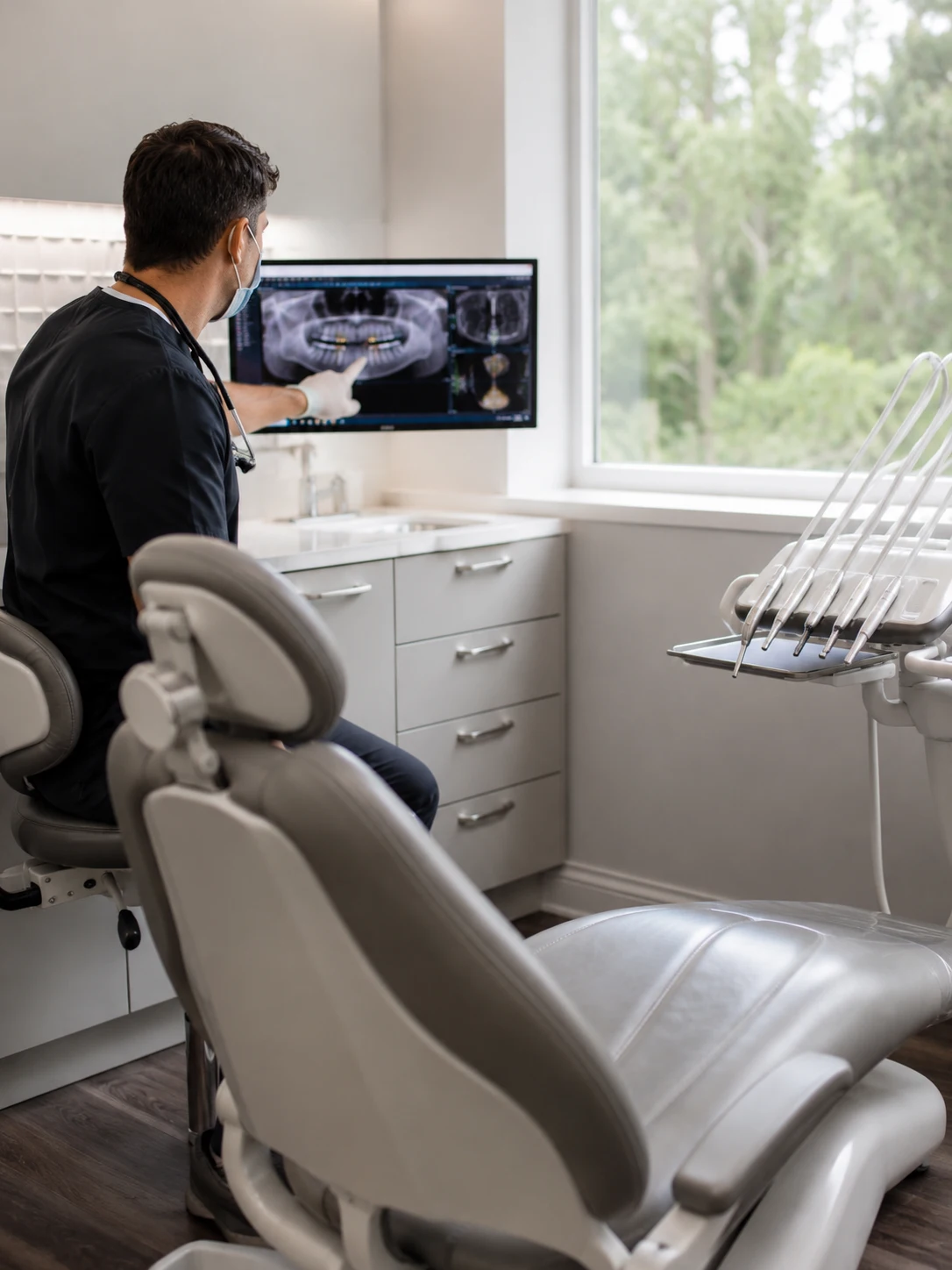
No matter which path brought you in, the modern solution tends to look the same: guided implant surgery built on detailed 3D imaging. Instead of placing an implant by feel or estimation, we scan your jaw to map bone density, nerve position, and sinus location before any drilling ever starts. That data creates a surgical guide that steers the implant into the exact planned spot. This imaging-based approach strips away most of the guesswork that once made implant decisions feel like a leap of faith, giving Rexburg patients a clear, visual basis for saying yes to treatment with confidence instead of just hoping for the best. Call now
Not every dental problem calls for an implant conversation, and a good dentist will say so upfront instead of steering every patient toward the most involved option. If a simple filling can handle a cavity, or a root canal and crown can still save a tooth with deep decay, then an implant consultation is getting ahead of itself. Implants exist for teeth that are truly beyond saving, not for teeth that just need routine restorative work.
Plenty of patients in Rexburg walk in convinced they’re about to lose a tooth, when the tooth is actually sound enough to keep. A cracked filling, a small patch of decay caught early, or sensitivity from a worn edge are all common problems that respond well to conservative treatment. Jumping straight to implant planning in these cases usually costs more time and money than necessary, and it risks removing a tooth that still had good years of function left in it.
It’s also worth clearing up what an implant consultation actually involves, since some patients assume it means surgery that same day. It doesn’t. A consultation is purely an evaluation: a visual exam, imaging like a 3D scan, and a conversation about whether an implant even makes sense given your bone density, gum health, and goals. Surgery, if it’s recommended at all, gets scheduled separately, after you’ve had time to review the findings, ask questions, and decide how you want to move forward.
That honesty is deliberate. A practice willing to tell you a consultation isn’t needed yet is choosing education over filling a procedure slot, and that same transparency should show up at every visit, whether or not it ends in a same-day appointment. If you’re not sure which category your situation falls into, a quick phone call usually clears things up faster than guessing on your own. Call now
Need help with Implant consultation? (208) 400-9946
Schedule An Appointment. Family First Dental is ready to help.
Before your implant consultation, jot down your questions and bring a list of any medications you’re taking. We’ll ask about your health history, since things like diabetes or smoking can affect healing, and we’ll want to know about any past bone loss issues.
It’s common for patients to walk in a little nervous about cost, and that’s fair. Implant pricing in this field depends on a few moving parts: how many teeth need replacing, whether a bone graft has to happen first, and what kind of restoration goes on top, whether that’s a crown, a bridge, or a full denture.
During your consultation, we use AI-assisted X-rays and cone beam CT scans, shown right on the screen. You’ll see your own jawbone, your own nerve position, your own case. No guessing games.
We also offer free wellness scans, so getting that first look doesn’t have to hinge on a big financial decision. And with evening hours Tuesday and Thursday until 7 PM, plus Saturday appointments, you don’t have to burn a workday just to get answers.
Before You Book: Write down your questions ahead of time. A short list keeps your consultation focused and makes sure nothing important gets left out.
Rexburg doesn’t run on a typical small-town calendar. Because BYU-Idaho operates on trimesters rather than the usual fall-to-spring academic year, the town sees three separate waves of arrivals and departures every year instead of just one. That’s why our scheduling team never treats consultations as a once-a-year scramble. Whether you’re wrapping up classes in April, starting a new term in September, or settling in for the winter trimester, there’s almost always a realistic window to get an implant consultation booked without waiting months for an opening.
This rolling schedule is especially helpful for students weighing a dental implant while juggling finals, internships, or an upcoming mission call. For those preparing to serve, we offer missionary dental exams as a standalone service, and an implant consultation can often be coordinated right alongside that visit, so a departing missionary leaves with a complete, documented dental plan instead of an open question mark.
Idaho winters add another layer to the planning. Sub-freezing temperatures and snow-packed rural roads can turn a short drive from outside Rexburg into a slow, cautious trip. That’s part of why we keep evening and Saturday hours open, so patients from surrounding farming communities aren’t forced onto hazardous roads during the coldest, darkest parts of the day. A consultation booked for a Saturday morning or early evening often means safer travel and less disruption to a workday or milking schedule.
None of this flexibility is an afterthought. It reflects a broader commitment to making implant care accessible to every kind of patient in the Rexburg area, whether you’re a nineteen-year-old student or a lifelong rancher, so that convenient access genuinely means a smile within reach for everyone.
Our friendly team at Family First Dental is here to help! Contact our office today and let us take care of your dental health.
Common questions about Implant consultation
Most implant consultations in our Rexburg office take about 45 to 60 minutes. That time covers the cone beam CT scan, a look at your bone density and gum health, and a full conversation about your options. We build in time for questions, so you’re not rushed through decisions about something this important. You’ll leave knowing your timeline, not just a diagnosis.
No, surgery is never scheduled the same day as your consultation. A consultation is only an evaluation, using imaging and an exam to see if an implant is right for you. If surgery makes sense, we schedule it separately, giving you time to review your scan, ask questions, and think it over. That extra step protects you from feeling pressured into a fast decision.
You’re likely a good candidate if you have a missing tooth, a failing bridge, or a denture that slips or rocks when you eat. Chronic pain from a cracked or repeatedly treated tooth is another common sign. We check your bone height, width, and gum health with a 3D scan before confirming anything, so you get a real answer instead of a guess based on how your mouth looks.
You may still be a candidate, even after hearing otherwise. We regularly see second-opinion patients in Rexburg who were told extraction and a bridge were their only choice, only to learn an implant was possible once we planned it with detailed imaging. A cone beam scan often reveals bone and nerve details a flat X-ray misses, which can change the whole plan.
Not always. If a filling, root canal, or crown can still save your tooth, an implant consultation is getting ahead of the problem. We tell patients upfront when conservative treatment is the better call, even if that means no implant conversation is needed yet. Keeping a tooth that still has good years left almost always beats replacing it too soon.
Your jawbone naturally starts losing density in the area of a missing tooth once it’s gone. This bone loss continues over time, which is why waiting can eventually mean more prep work before an implant can go in. During your consultation, we check your current bone height and width so you know exactly where you stand today, not just what the future risk looks like.