
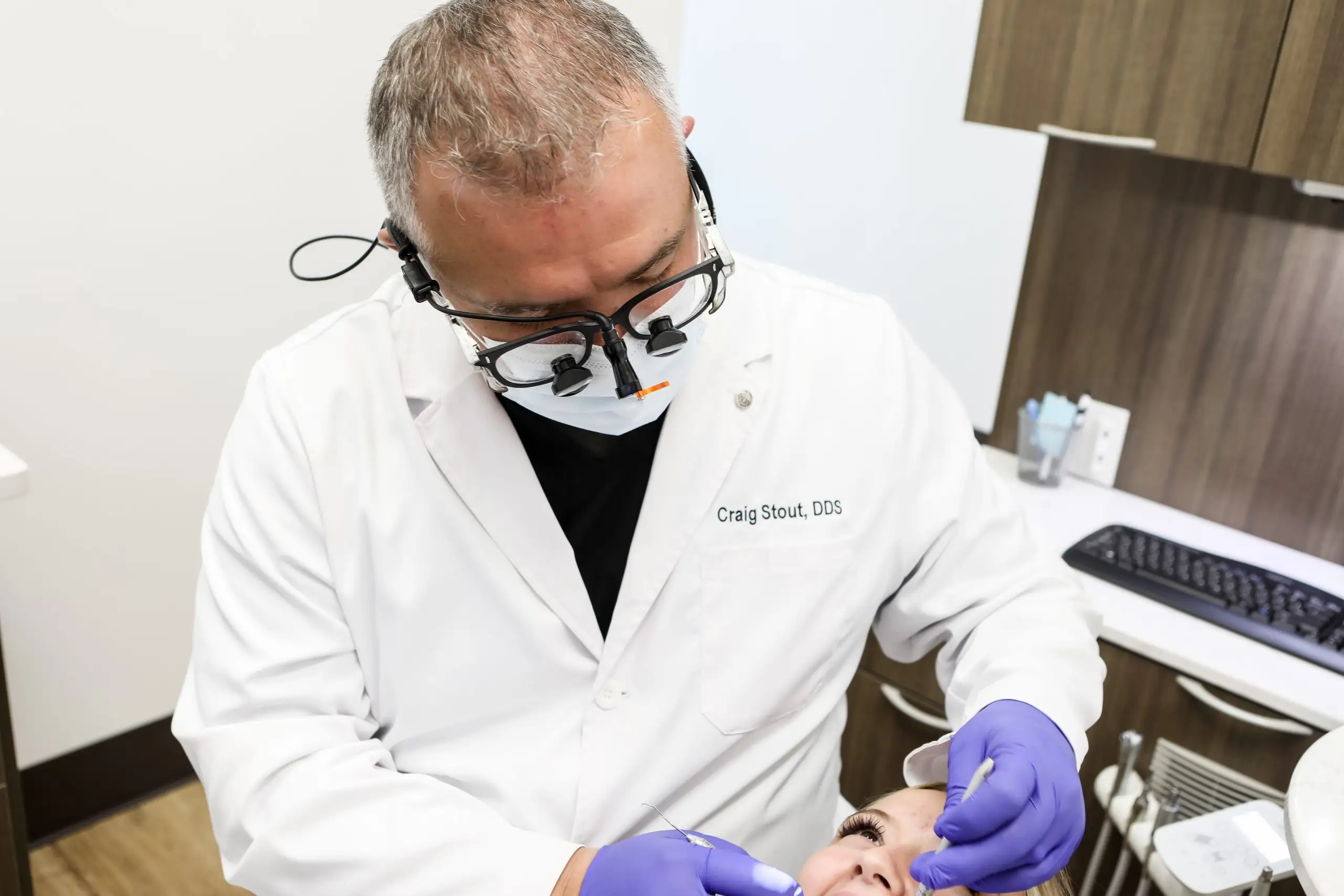
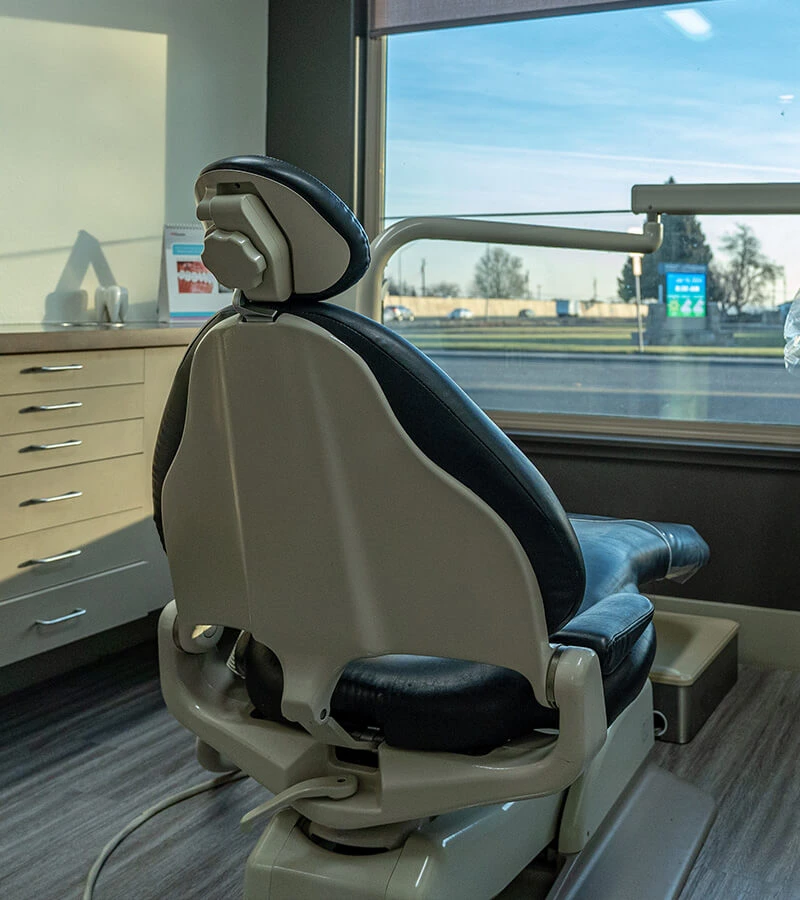
Rexburg's trusted dentist for your whole family
Quick Summary: A few worn teeth or one bad tooth usually just needs a filling or a crown. A full mouth reconstruction comes in when several teeth, your bite, and your gums all need work at the same time. If you’re dealing with pain, worn down teeth, and a bite that feels off, all at once, that’s your sign.
So how do you know which one you’re dealing with? Look at how many things are going wrong at once. One cracked tooth is a fix. Three broken teeth, a shifting bite, and gum trouble at the same time, that’s a bigger picture problem.
We had a patient last year who kept getting headaches every afternoon. Turned out her back teeth had worn down so much her bite had shifted, and her jaw was working overtime to compensate. That’s the kind of pattern we see every week here in Rexburg. Teeth grinding shows up a lot with our long, dry winters when folks clench through stress or cold mornings.
We use AI-assisted X-rays and cone-beam imaging to show you exactly where the damage is. You’ll see it on the screen next to you, not just hear us describe it. Call (208) 400-9946
Not every smile needs a rebuild. Full mouth reconstruction is a big step, and it’s not the right answer for a single bad tooth or a smile that just looks a little dull.
We say this a lot in the chair. If your bite works, your jaw doesn’t hurt, and you’ve only got one or two problem spots, you probably don’t need a full rebuild. You need a fix.
Those cases usually get handled with a crown, a filling, whitening, or Invisalign. Simple, targeted, done.
Here’s how we tell the difference. We take digital X-rays and, when needed, a cone beam CT scan. You see the images on the screen right next to you, not described to you secondhand. If your bone, joints, and bite all look stable and only one tooth is the problem, we’ll tell you that straight. We’re not going to talk you into more treatment than your mouth needs.
So how do you know which camp you’re in? If chewing hurts on multiple teeth, your bite feels off, or you’ve lost several teeth over the years, that’s a different picture. But if it’s just one tooth bugging you, start there. A free wellness scan is a low-pressure way to find out which situation you’re dealing with.
A full mouth reconstruction never starts with a drill. It starts with a exam that maps out everything happening in your mouth at once: bite alignment, gum health, bone density, worn or fractured teeth, old restorations that are failing, and jaw joint function. Rexburg dentists building these plans typically pair that exam with digital X-rays, 3D cone-beam imaging, and photographs, giving a complete picture that a visual check alone would miss.
Once the diagnosis is complete, the plan gets built out loud, at the chairside, using AI-assisted imaging software that overlays a projected outcome onto your own facial photos. Instead of describing what new crowns, implants, or a revised bite might look like, the dentist shows it on the monitor in real time. This step matters especially for reconstructions involving multiple procedures, since patients can ask questions, request adjustments, and understand the sequencing before a single appointment is scheduled.
Cost for a full mouth reconstruction is determined case by case, since every plan combines a different mix of procedures such as implants, crowns, root canals, gum treatment, or orthodontic work. Two patients rarely receive identical treatment lists, so identical pricing is uncommon. Most Rexburg practices offering this level of care provide financing and payment plan options to spread costs over time, and it is worth reviewing a
detailed pricing and cost guide before your consultation so you arrive with realistic expectations and informed questions about what drives the final number. Call now
Not sure what your Full mouth Reconstruction project needs? Ask us. (208) 400-9946
Schedule An Appointment. Family First Dental is ready to help.
Many patients arrive at our Rexburg office after another dentist has already told them they need extensive dental work, sometimes involving several teeth or their entire bite. A second opinion consultation is often the real starting point of full mouth reconstruction. During this visit, we review prior x-rays and treatment plans, take our own scans if needed, and give you an honest, itemized breakdown of what is necessary versus optional, so you feel confident before committing to a multi-phase treatment plan.
Once a plan is confirmed, treatment begins with the foundational phase. This step clears out disease and infection before any permanent work is placed, because building crowns or implants on top of untreated problems only leads to failure later. This phase commonly includes:
With a healthy foundation in place, we move into the restorative phase, which is typically the longest part of treatment. This is where function and appearance are rebuilt using crowns, bridges, dental implants, and dentures or partials depending on how many teeth are missing. For implant placement, we use guided implant surgery, meaning the exact position and angle of each implant is mapped out in advance using 3D imaging. This reduces surgical time, improves accuracy around nerves and sinuses, and generally shortens healing for our Rexburg and eastern Idaho patients who are often coming from surrounding communities like Rigby or Sugar City for appointments.
The final phase focuses on bite adjustment and follow-up care. Once restorations are in place, we check how your upper and lower teeth meet during normal chewing and speaking, making small adjustments to prevent uneven wear, jaw discomfort, or premature breakdown of new work. Follow-up visits over the following months confirm that gum tissue is healing properly, implants are integrating, and the bite feels stable and comfortable in daily use. Call now
It is normal to feel apprehensive about a treatment plan that may involve extractions, implant placement, crown preparation, and multiple visits spread across several months. Many Rexburg patients delay full mouth reconstruction for years because of dental anxiety, fear of pain, or a difficult experience earlier in life. A well-run reconstruction practice treats comfort as a core part of the plan rather than an afterthought, offering several sedation levels so each appointment matches the patient’s needs and the complexity of that day’s work.
Nitrous oxide, sometimes called laughing gas, is a common option for shorter procedures or for patients with mild to moderate anxiety. It is inhaled through a small nasal mask, takes effect within minutes, and wears off quickly once the mask is removed, allowing patients to drive themselves home after the appointment. For more involved visits, such as multiple extractions in one sitting or the placement of several implants, oral conscious sedation is often available. This involves taking a prescribed pill before the appointment that produces a deeply relaxed, drowsy state. Patients typically remain responsive but have little memory of the procedure afterward, and a driver is required for the day of treatment.
Comfort options work hand in hand with clear planning. When a dentist has already reviewed 3D imaging and mapped out each phase of a reconstruction, patients arrive at every visit knowing exactly what will happen and roughly how long it will take. Pairing that transparency with a sedation choice suited to the day’s procedure turns what could feel like an overwhelming, unpredictable process into a series of manageable, well-understood steps. Patients who have avoided dental care for years often find that this combination of information and comfort measures makes starting treatment far less than they anticipated.
Our friendly team at Family First Dental is here to help! Contact our office today and let us take care of your dental health.
Common questions about Full mouth Reconstruction
You likely need a full reconstruction if several problems are happening at once, not just one. Look for worn or cracked teeth in more than one spot, a bite that feels different than before, jaw aches after eating, or gums that bleed often. One cracked tooth is usually a simple fix. But three broken teeth plus a shifting bite is a bigger picture problem. A quick exam with digital X-rays can show you exactly which situation you’re in.
Your first visit starts with a full exam, not a drill. We check your bite, gums, bone, and jaw joints, then take digital X-rays and 3D cone-beam images so you see what’s really going on. You’ll view the pictures on the screen right next to you, not just hear us describe them. From there, we build a staged treatment plan out loud, so you understand the order of steps before scheduling anything.
Yes, and many of our Rexburg patients start exactly that way. If another dentist already told you that you need extensive work, bring in your prior X-rays and treatment plan. We’ll review everything, take our own scans if needed, and give you an honest, itemized breakdown of what’s necessary versus optional. This helps you feel confident before agreeing to a multi-phase treatment plan.
Yes, it can play a real role. Our long, dry winters mean a lot of folks clench or grind their teeth without realizing it, especially during cold mornings or stressful stretches. We see this pattern often here in Rexburg. Over time, that grinding wears down back teeth and can shift your bite, which is one of the signs we look for when deciding if a full reconstruction is needed.
Timelines vary because every plan is staged differently based on what your mouth needs. Treatment usually starts with a foundational phase that clears out infection or disease, like extractions or gum therapy, before any permanent crowns or implants go in. Building final restorations on top of untreated problems leads to failure later, so we sequence everything carefully. Your dentist will walk you through the expected order and pacing at your consultation.
We use digital X-rays and 3D cone-beam CT scans to see what’s happening below the gumline. These images reveal bone density, hidden decay, and jaw joint issues that a visual check alone would miss. You’ll see everything on the monitor next to you during your visit, not just hear it described. This lets you ask questions and understand exactly why each step of your plan is recommended.